Quebec plans to end clock changes, with the time to keep still open
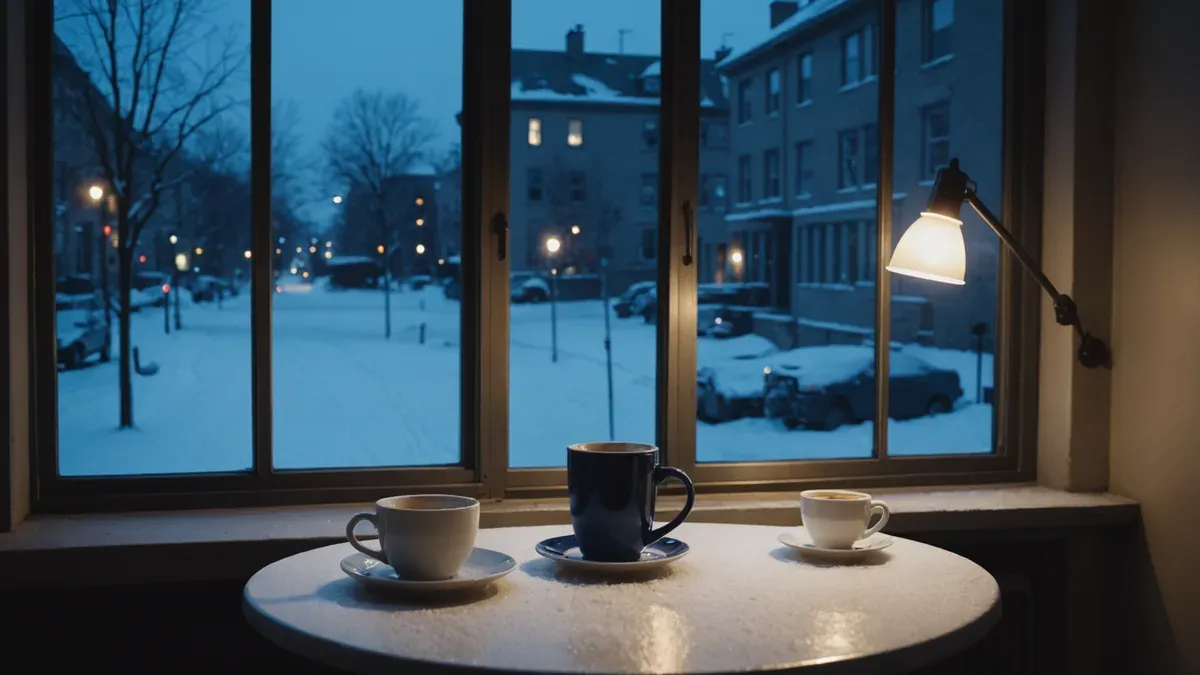
The night of 31 October to 1 November may have been the last time Quebecers turned their clocks back. On 28 October, the government of Premier Paul St-Pierre Plamondon announced that it will table a bill to end the seasonal clock change, without saying which time the province will keep all year round. Three weeks later, that choice is still open, and no text has yet reached the National Assembly.
What Quebec has announced
The announcement came from the office of the Justice Minister, Marie-Claude Sarrazin, in a statement published by the Quebec government. The minister wants the autumn change to be the last, describes the clock change as a practice of the past and promises “rapid” consultations in which specialists, the public and the opposition parties will be heard. Those consultations are due to start “in the coming months”, once parliamentary business resumes. The Premier wrote that the November change was “most probably” the very last, Radio-Canada reported, and that experts would be heard by a short parliamentary committee. La Presse and Le Devoir reported the plan as well.
The National Assembly has not sat since: after the general election of 5 October, the opening of the new legislature was pushed back twice and is now set for 1 December, Radio-Canada reported. So the bill is announced, not tabled, and even less adopted.
The government builds on a consultation run by its predecessor, which more than 214,000 people answered in the autumn of 2024: 91% wanted the clock changes to stop and, among them, 72% preferred to keep summer time all year, the Quebec government said in March 2025.
Standard time or daylight time: the open question
That 72% is where the debate begins. Specialists of the body clock lean the other way, towards standard time all year: the problem, Dr Nadia Gosselin told Radio-Canada, is asking the whole population to lose an hour of sleep when the clocks go forward in spring.
In French: « heure avancée » — Quebec’s term for daylight saving time, which France calls « heure d’été ». Its counterpart, standard time, is « heure normale ». The bill will have to say which of the two becomes permanent.
MétéoMédia has worked out what each option would mean in Montreal. Quebec runs on UTC−5 in winter and UTC−4 in summer. Permanent standard time keeps the clocks where they are now: at the summer solstice the sun would set at 19:45 instead of 20:45, and in late spring and summer it would rise just after 4 a.m. Permanent daylight time means moving the clocks forward one last time in spring 2027: the winter solstice sunset would come at 17:25 rather than 16:25, but December sunrises would be around 8:25.
Ontario, New York and the neighbours
Quebec does not choose alone. Most of its trade is with Ontario and the United States, Radio-Canada noted, and it also reported that the US House of Representatives voted in July for permanent daylight time nationwide, with Senate support uncertain. Ontario passed a law in 2020 to move to permanent daylight time, but it only takes effect in coordination with Quebec and New York State, Global News reported at the time, and it has never been brought into force. On 5 November, Radio-Canada reported that Ontario’s Premier, Doug Ford, was “very open” to talks with Quebec, and fully on board if New York and the US eastern corridor followed.
If Quebec chose permanent standard time while Ontario kept changing, Gatineau and Ottawa, the two halves of the capital region, would be an hour apart every summer. If it chose permanent daylight time on its own, the gap would open in winter instead.
What it means if you live abroad, or have family in Quebec
On 1 January 2026, 22,930 French citizens were on the consular register in the Quebec City district and 71,544 in the district covering Montreal, Moncton and Halifax, according to the French government order that sets the number of consular councillors. Registration is voluntary, so the real community is larger. Many of its members already juggle two administrations; Canada, for instance, is one of the four countries in the trial of remote passport renewal.
Then there are the calls home. Today Montreal is six hours behind Paris for most of the year, and five hours behind for a few weeks in spring and autumn, because Europe and North America do not switch on the same Sunday: this autumn France went back on 25 October and Quebec on 1 November. France is not about to stop either: abolishing the change “is no longer on the agenda” in the EU, service-public.gouv.fr says.
- With permanent standard time, Quebec would be six hours behind Paris in the European winter and seven in the European summer. A Sunday call made at 7 p.m. in Paris in July would ring at noon in Montreal, not 1 p.m.
- With permanent daylight time, the gap would be five hours in the European winter and six in summer.
The time difference already shapes election day: French voters in the Americas cast their ballots on the Saturday, a day before mainland France, which matters for anyone planning to vote from abroad in the 2027 presidential election. And for those who kept a flat or a family house in France, the closer deadline is fiscal: the council tax on second homes falls due on 15 December.
The next dates to watch
- 1 December 2026: the National Assembly sits again. The bill can only be tabled once the house is in session.
- The consultations: short hearings of experts, the public and the parties, “in the coming months”. No date yet.
- 14 March 2027: Quebec’s clocks go forward as usual unless a new law says otherwise. If the government picks daylight time, this would be the final change; if it picks standard time and the law is passed in time, the clocks would stay where they are. Europe moves to summer time on 28 March 2027.
This article was written with the assistance of artificial intelligence.
Editorial policy and use of artificial intelligence